
Can You Sublimate on Black Shirts? What Works and What Doesn't
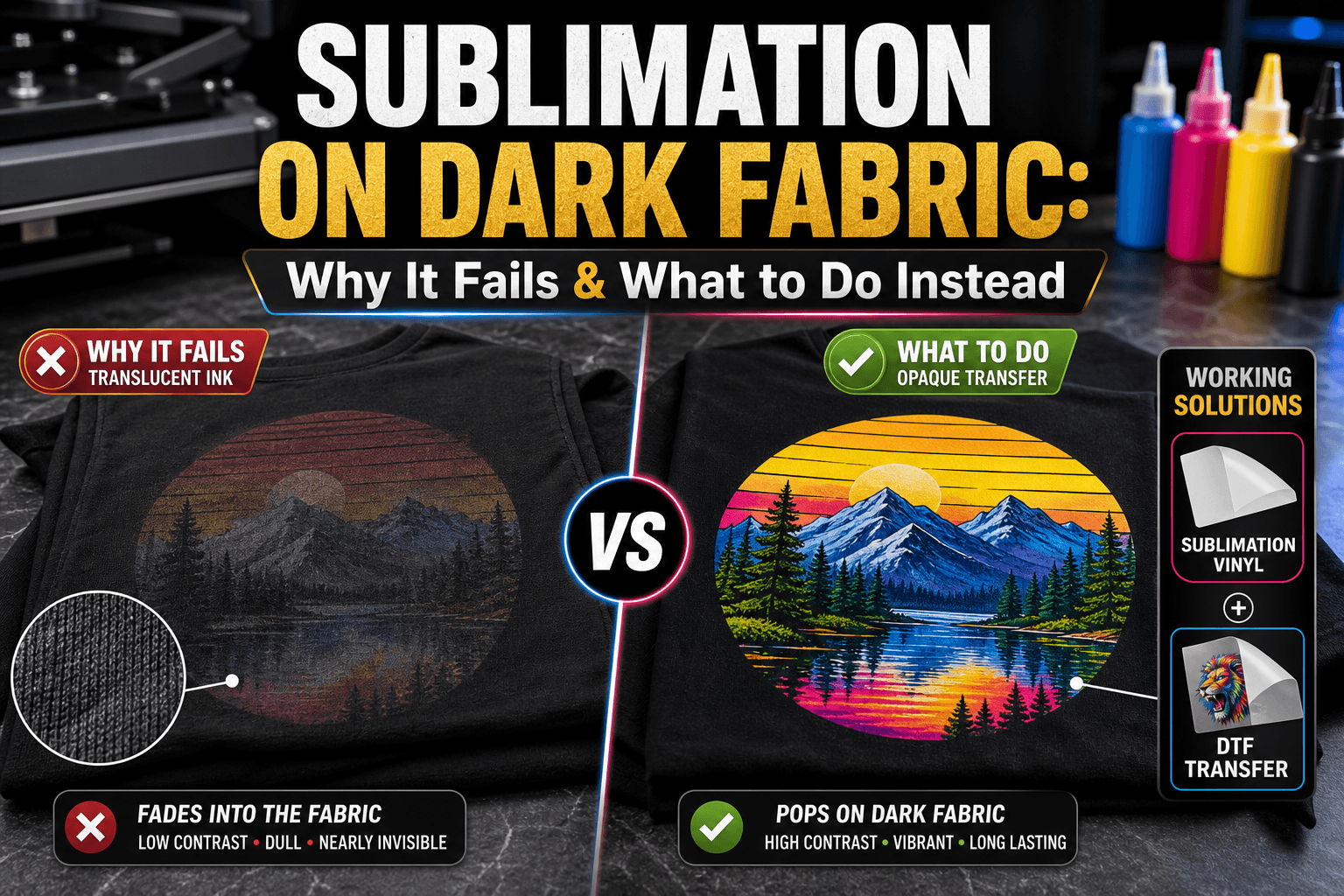
Print a black T-shirt with sublimation and the design all but disappears. Before you blame the press or the ink, know this: it’s baked into how sublimation produces color — a different machine won’t fix it.
The root cause: sublimation ink is translucent
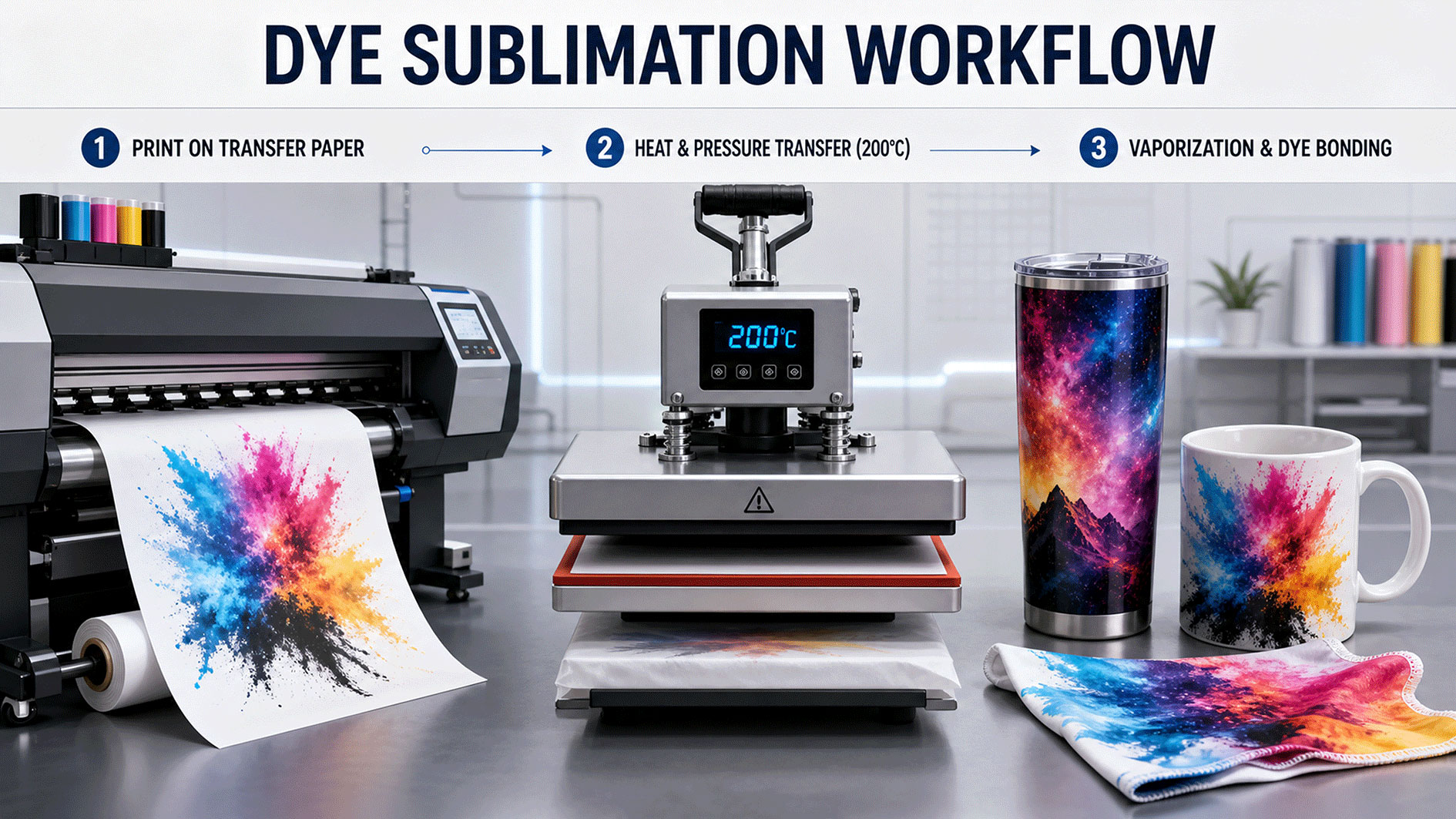
Sublimation ink is a disperse dye. During transfer it turns from solid straight into gas, then penetrates the surface of the substrate. Color is built additively on top of the base tone, not laid over it the way screen printing or DTF does.
So the problem isn’t that the ink won’t transfer — it’s that the print gets buried. The base tone drags down the design’s brightness and saturation until your eye can barely register it.
The base tone sets your color quality
| Substrate base | Sublimation possible? | What you actually get |
|---|---|---|
| White | Yes | Like printing on blank paper — nothing interferes with the ink, so color is at its purest and most saturated |
| Light | Yes | Color shifts slightly toward the base tone (grayer, warmer or cooler). Approve a proof before you run production |
| Dark / black | No | The design is swallowed by the base and becomes practically invisible |
Working with dark substrates: three routes
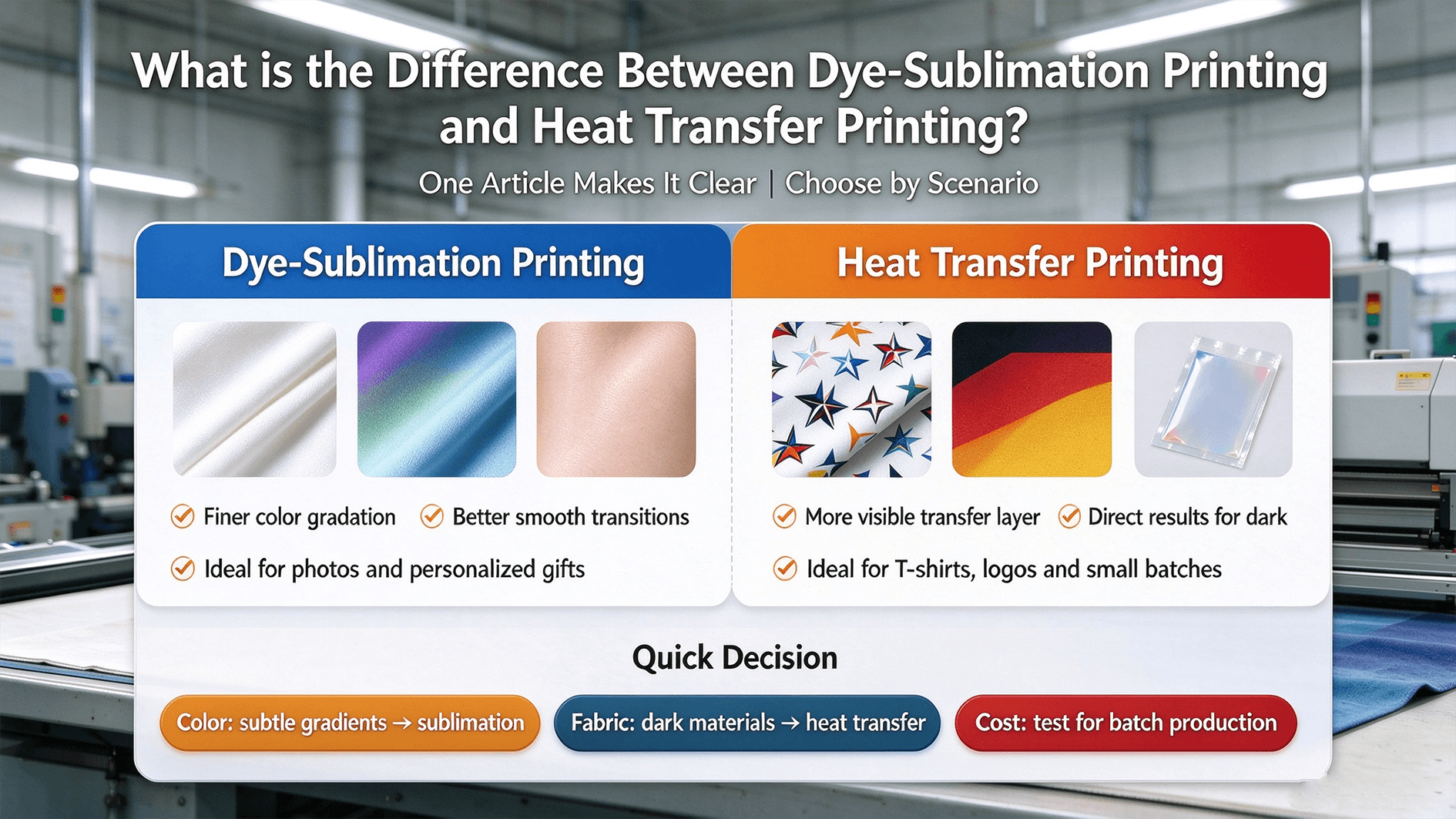
1. Change the process — switch to DTF or heat transfer vinyl. Both lay down a white ink or white film layer first, then apply the color on top, which is why they work on dark fabric. Note that this is a different process entirely, not a tweak to your sublimation setup.
2. Change the substrate — choose white-coated rigid materials. White-coated mugs and coated panels, for example: the coating itself acts as the white base, so sublimation prints directly onto it.
3. Add a white base layer — spray a white primer, then sublimate. This works on certain rigid substrates and suits small, highly customized runs. The extra step does add cost and affects yield, so run the numbers first.
An overlooked prerequisite: white doesn’t guarantee sublimation
A white cotton T-shirt is still white, yet disperse dye has almost no affinity for cotton — the result still comes out faded and washes away. Sublimation requires polyester fiber or a polymer-coated surface. A white base is necessary, not sufficient.
What we’re built for
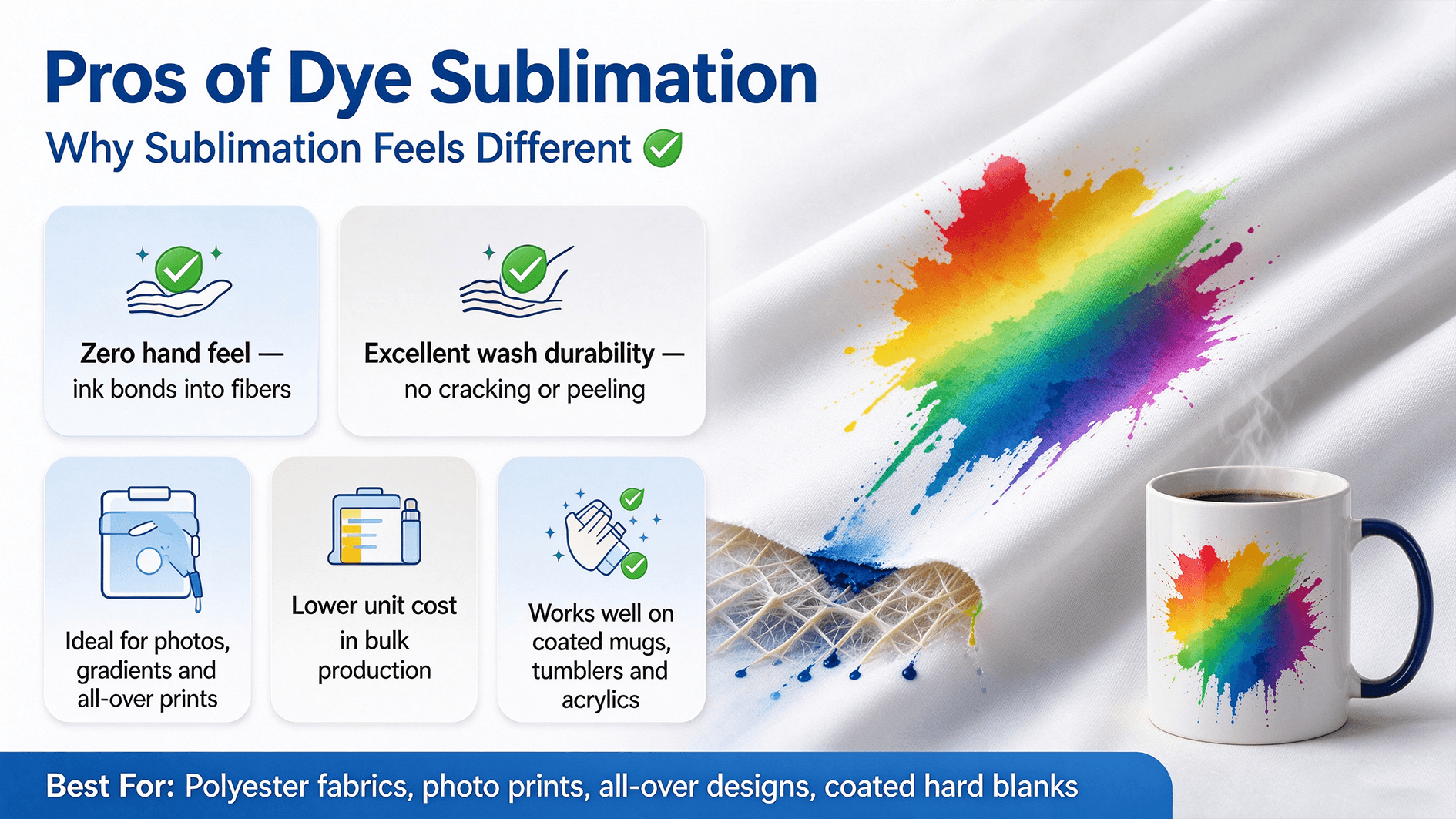
If your work is mostly light polyester fabric and white rigid substrates, our white-coated mugs (such as our 11oz white sublimation mugs) and polyester textile blanks (textile products) are engineered for sublimation: the coating and the fiber are both specified for ink absorption and color fastness, so prints come out highly saturated instead of washed out.
New to the process? Our sublimation printing guide for beginners covers inks, transfer paper and press settings before you commit to a blank.
The short version
Sublimation is an additive color process — the lighter the base, the truer the color.
To build a blank kit by substrate type, start here: sublimation blanks supplier.