

In the custom printing world, dye sublimation, heat transfer vinyl (HTV), and DTF are the three most common methods. If you’re not sure which one to focus on, this breakdown will help you decide.
Dye Sublimation — Pros:
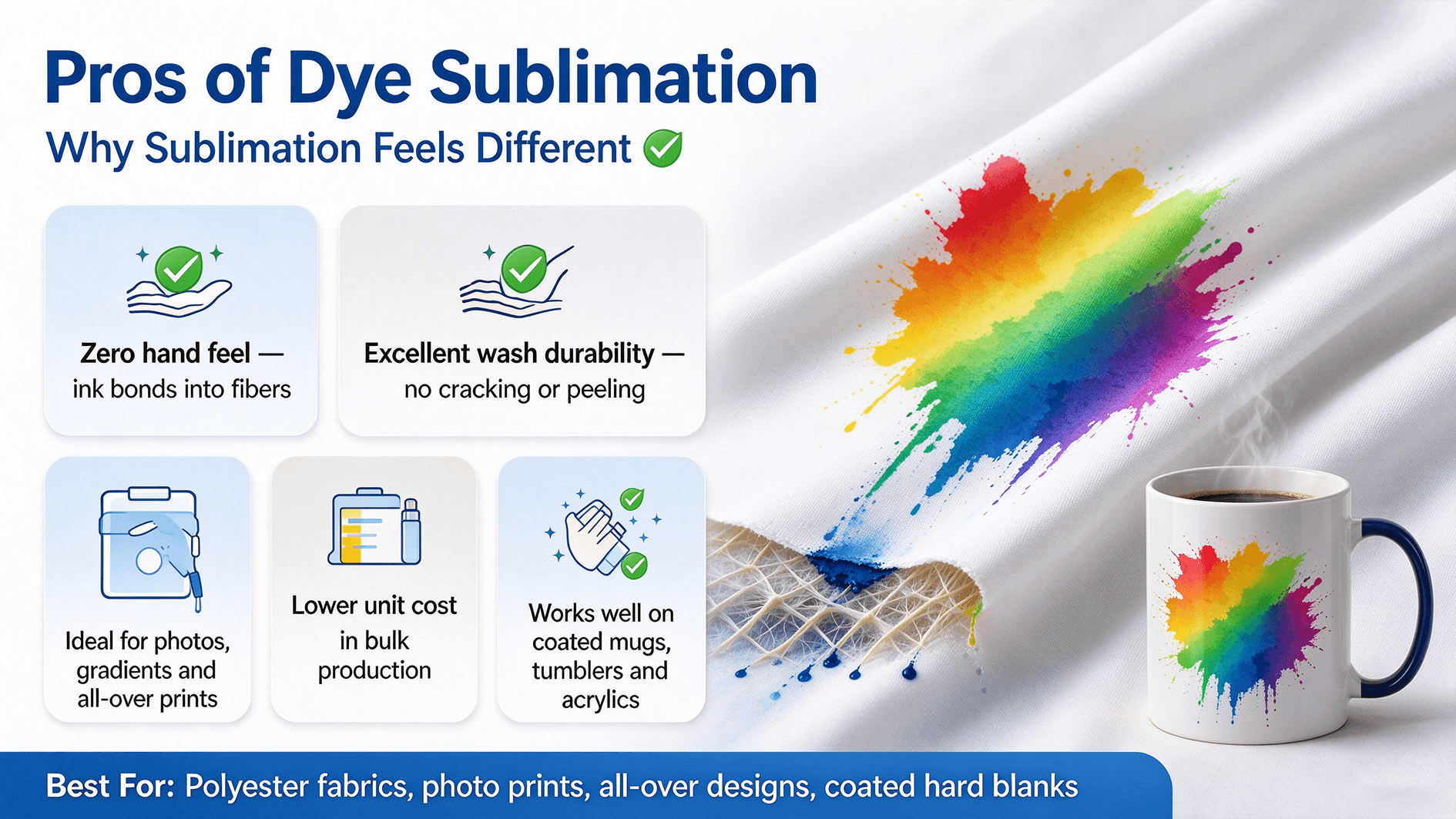
Zero hand feel—the print becomes part of the fabric
Won’t fade, crack, or peel; extremely wash-resistant
Great for full-color, gradient, and photo-quality designs
Works on hard substrates too (mugs, tiles, metal)
Dye Sublimation — Cons:
Only works on light-colored polyester or coated substrates
Can’t print on cotton or dark fabrics
Mid-to-high per-unit cost; requires dedicated ink
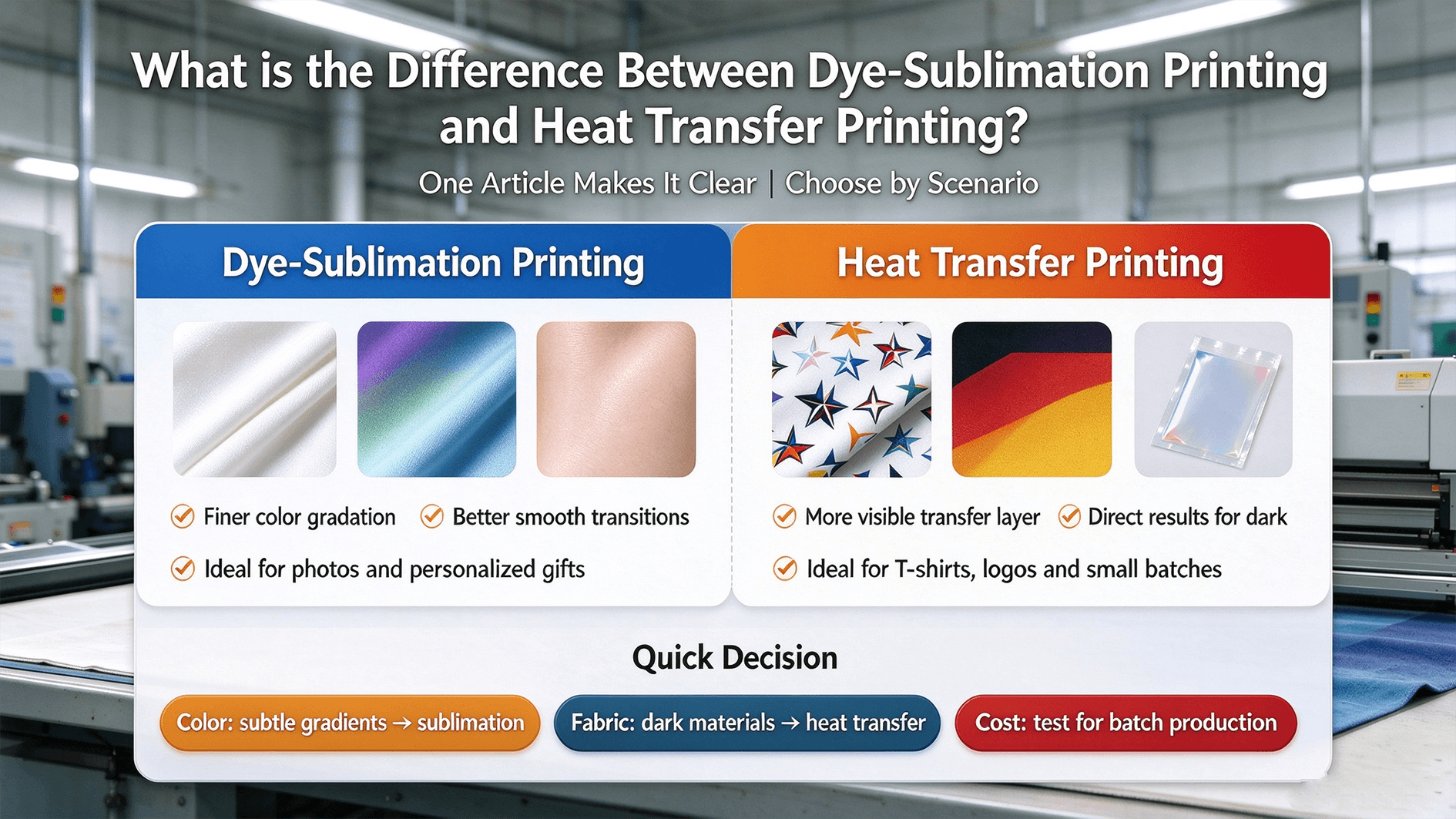
HTV — Pros: Works on cotton and dark fabrics; low equipment barrier.
HTV — Cons: Single-color or simple shapes only; has hand feel; complex designs need layering.
DTF — Pros: Works on cotton, dark fabrics, and full-color designs; better hand feel than HTV.
DTF — Cons: Noticeable adhesive feel; less wash-resistant than sublimation; powder and film costs fluctuate.
Conclusion: If your main business is polyester sportswear, mugs, tile photos, or metal gifts, dye sublimation is the best all-around choice. Our sublimation transfer paper and coated mugs are built for exactly these high-frequency applications—feel free to order samples and compare.
And if you want to run all three lines, we also carry HTV, DTF supplies, and the matching heat press machines—no need to juggle multiple suppliers.
Bottom line: There’s no single “best” method—only the one that fits your product.